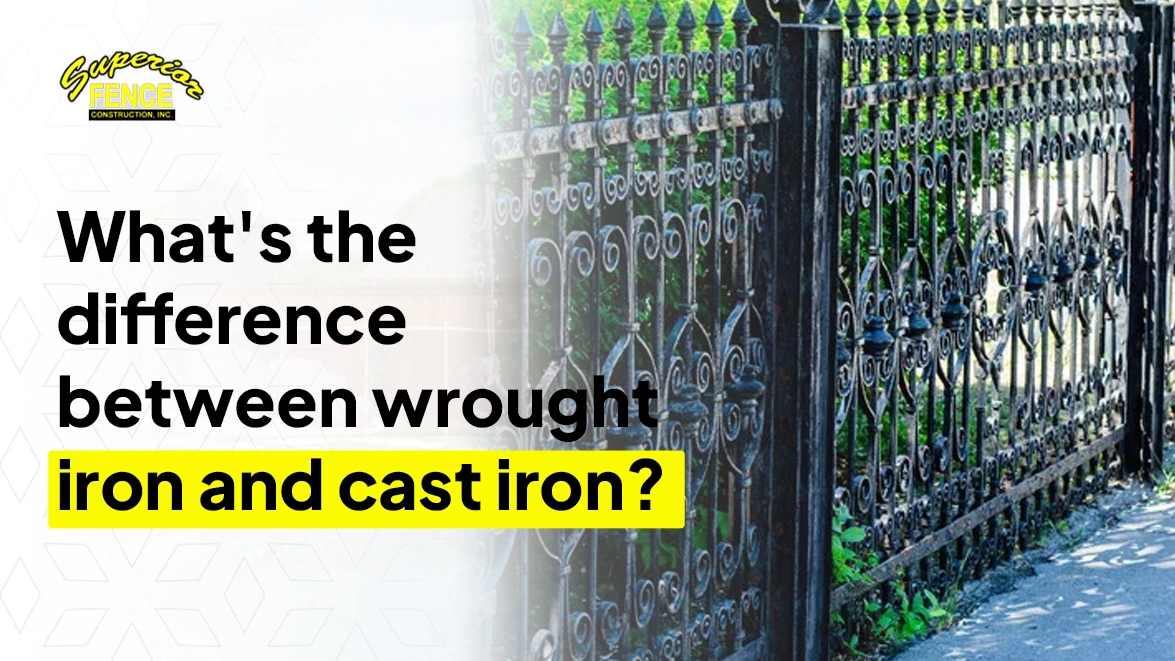
Wrought iron is a soft and malleable iron. It has very low carbon content (typically less than 0.08%), which makes it easy to shape, simple to weld, and resistant to corrosion. On the other hand, cast iron contains a much higher carbon content (typically 2–4%). This makes it hard, durable, and excellent for retaining heat. However, it is also more brittle.
Core Takeaways
- The main difference is how they’re made. Wrought iron is heated and forged into shape. Cast iron is melted and poured into molds, giving each material different properties.
- Wrought iron is flexible and corrosion-resistant; cast iron is hard and brittle. Wrought iron bends without cracking and is easier to weld. Whereas cast iron excels at handling compression and retaining heat.
Table of Contents
ToggleWhat Is Wrought Iron?
Wrought iron is heated and worked repeatedly to remove most of the carbon and impurities. That working process lines up the slag fibers through the metal, which gives it a fibrous internal structure. The result is a material that bends under stress rather than snapping. You can shape it, weld it, and work it without it giving out on you. It also resists corrosion better than cast iron, though it still needs maintenance to keep rust at bay.
What Is Cast Iron?
Cast iron starts as melted iron poured into a mold and left to solidify. The high carbon content left in the material makes it harder than wrought iron but a lot more brittle. It handles heavy compressive loads and high heat without deforming, which is why it works so well in cookware and industrial applications. But it can’t be bent or shaped after it sets. Hit it with enough sudden force and it cracks rather than bends.
Wrought Iron vs Cast Iron: Key Differences
Here is how the two materials compare across the factors that matter most. Let’s take a look at the table.
| Feature | Wrought Iron | Cast Iron |
| Carbon Content | Less than 0.08% | 2–4% |
| Manufacturing | Heated and forged | Melted and cast |
| Strength | High tensile strength | High compressive strength |
| Flexibility | Flexible | Brittle |
| Weldability | Easy | Difficult |
| Heat Retention | Moderate | Excellent |
| Rust Resistance | Better | Lower |
| Common Uses | Gates, railings, fences | Cookware, pipes, machinery |
Manufacturing Process
Wrought iron is worked hot by repeated heating and hammering or rolling. Cast iron is melted and cast into molds. The manufacturing process determines the internal structure of each material and sets the mechanical properties. You can’t produce wrought iron’s fibrous structure by casting and you can’t produce cast iron’s hardness by working.
Strength and Durability
Both are strong, but in different ways. The tensile strength of wrought iron is higher, so it is better at resisting pulling or bending to the breaking point. Cast iron has more compressive strength, meaning that it can bear weight without deforming. Cast iron is good for structural applications where the weight is applied from overhead. If the material is going to be pulled, bent, or impacted, wrought iron can withstand more.
Flexibility and Workability
Wrought iron is fairly easy to form, bend, and weld when heated. Once cast iron has solidified, it cannot be shaped and is difficult to weld without cracking. This explains the historical dominance of wrought iron in decorative metalwork. A blacksmith could make curves, scrolls, and complex shapes that were just not possible with cast iron.
Appearance and Finish
Though both raw materials look similar in a dark grey color, wrought iron has a slightly grainy surface texture as a result of the working process, while cast iron has a smoother, more uniform surface as a result of the mold. Wrought iron will develop a unique patina with age. Cast iron tends to look more uniform and machined.
Weight and Density
Wrought iron is less dense and less heavy than cast iron of equal volume. Cast iron is generally denser and heavier than wrought iron for the same volume. The weight difference is relevant for applications in which the total weight is significant.
Rust and Corrosion Resistance
Cast iron is less resistant to corrosion than wrought iron. That’s due to the slag in wrought iron, which acts as a partial moisture barrier. Cast iron will rust more readily when exposed to moisture and must be maintained regularly to prevent obvious rusting. However, neither provides rust-proof properties without a proper coating or maintenance.
Cost and Availability
True wrought iron is rare, as well as expensive, today. That’s because production largely ceased in the mid-twentieth century. Most metal sold as wrought iron for fencing and gates is actually mild steel which behaves similarly but isn’t technically the same material. Cast iron is more widely available and also cheaper to produce since the casting process is more scalable than hand or machine working.
Which Is Better: Wrought Iron or Cast Iron?
Neither is universally better. It depends on the application. Wrought iron is the better choice when flexibility, decorative design, and corrosion resistance matter. Cast iron is the better option when strength under compression, heat retention, and durability are priorities. For example, wrought iron works well for gates and railings. Cast iron is preferred for cookware and engine blocks.
Can Wrought Iron and Cast Iron Be Welded?
Wrought iron is relatively easy to weld. That’s because of its low carbon content and ductility. Cast iron is much more difficult to weld because its high carbon content makes it prone to cracking during heating and cooling.
While cast iron can sometimes be repaired using specialized welding techniques, it generally requires experienced professionals and careful temperature control.
Which Lasts Longer: Wrought Iron or Cast Iron?
Both materials can last for decades when properly maintained. Wrought iron fencing can remain structurally sound for 50 years or more with regular painting and rust prevention. Cast iron also has a long lifespan. But, because it is more brittle, it is more likely to crack, especially under heavy impacts. Longevity ultimately depends more on maintenance and environmental exposure than on the material alone.
Which Requires More Maintenance?
Neither material is completely maintenance-free. Wrought iron should be inspected periodically for chipped paint and surface rust before refinishing. Cast iron, especially cookware and outdoor fixtures, also requires routine maintenance to prevent corrosion. In outdoor environments, protective coatings significantly extend the lifespan of both materials.
Is Cast Iron Heavier Than Wrought Iron?
Yes. Cast iron is generally heavier than wrought iron for the same volume. That’s because of differences in composition and structure. This additional weight makes cast iron well suited for applications like cookware and machine bases where stability is important. Wrought iron’s lighter weight makes it easier to fabricate and install in architectural applications.
Conclusion
Wrought iron and cast iron serve different purposes, despite similar appearances. Wrought iron is flexible, weldable, and more resistant to corrosion. Cast iron is harder, heavier, and better at retaining heat. Choose wrought iron for gates, fences, railings, and decorative metalwork. Choose cast iron for cookware, pipes, machinery, and industrial applications. The right material depends on your project’s specific requirements. If you’re planning a fencing project, Superior Fence Construction can help. Contact us today for a free estimate.