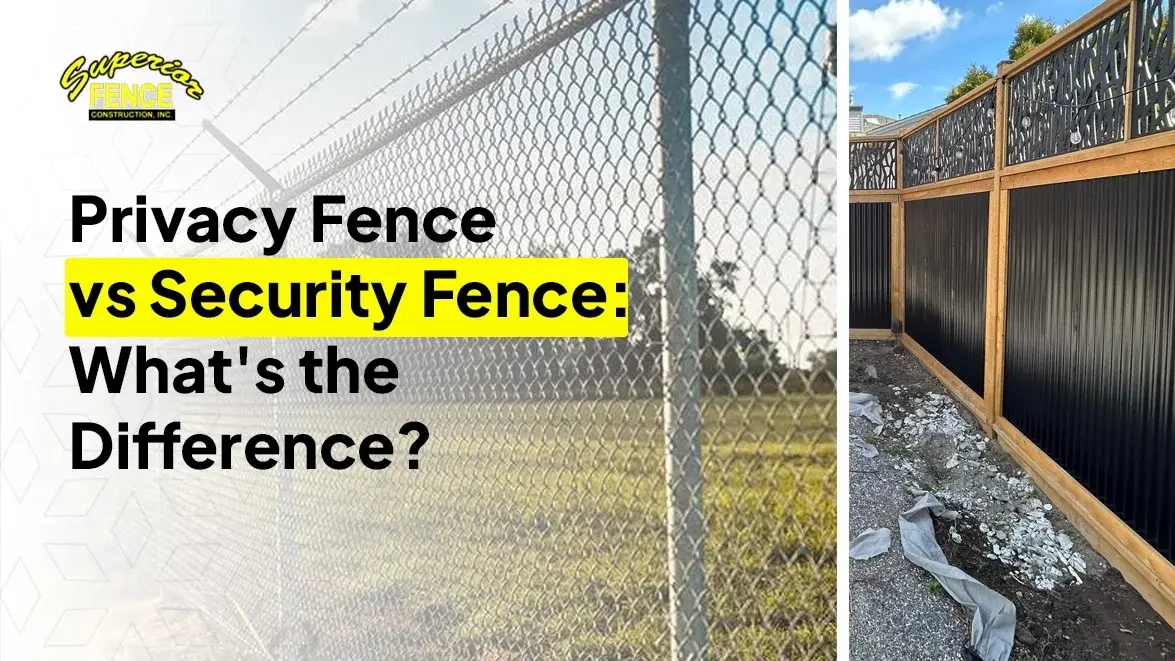
The main difference between a picket fence and a privacy fence is what each one is actually built to do. A picket fence is an open decorative fence of spaced boards that indicates boundaries without obstructing views. A privacy fence has no gaps, completely blocking sightlines, and creating an enclosed outdoor area. Picket fences are suitable for front yards. Privacy fences are best suited for backyards. The right choice depends on what you need the fence to do.
Core Takeaways
- Picket fences use spaced boards and sit three to four feet tall. They mark a boundary without blocking the view on either side.
- Privacy fences use solid panels with no gaps and run six to eight feet tall. The whole point is blocking sightlines completely.
- Front yards suit picket fences. The open style fits the street-facing aesthetic and usually meets local height restrictions without issue.
- Backyards suit privacy fences. If the space is for outdoor living, entertaining, or containing kids and pets, a solid fence makes more sense.
- Wood, vinyl, aluminum, and composite all work for both types of fencing. It all depends on your climate and how much maintenance you want to deal with in the long run.
Table of Contents
TogglePicket Fence vs Privacy Fence: Key Differences
Here’s how the two options stack up on the things that really matter in a choice.
Height and Coverage
Picket fences typically run three to four feet. Privacy fences run six to eight feet. The height difference is the most obvious distinction and it determines everything else about what each fence can and can’t do for you.
Purpose and Function
A picket fence is a visual boundary that adds curb appeal. It protects small children and pets to some extent but does not provide any real security or privacy. A privacy fence offers a feeling of enclosure when outside, obscuring views, muffling street noise, and keeping the yard visually separate from neighboring properties.
Visibility and Aesthetics
Picket fences create a welcoming appearance. They filter light while maintaining sight lines and are wonderful with traditional and cottage-style homes. Privacy fences create a more enclosed appearance. They are ideal for backyards where the visual emphasis is enclosure rather than openness. Some privacy fence styles include decorative tops or lattice panels for added visual interest while still providing privacy.
Cost of the Materials and Installation
Picket fences generally cost less because they use less material per linear foot. Fewer boards, shorter posts, and a lower overall height all bring the cost down. Privacy fences cost more because of the additional material needed for solid panels and taller posts that need to be set deeper to handle the added height and wind load.
Maintenance Requirements
Both fence types require similar maintenance depending on the material. Wood needs staining or sealing regularly, regardless of whether it’s picket or privacy. Vinyl and composite need almost no maintenance beyond occasional cleaning. The surface area of a privacy fence is larger, which means painting or staining takes more time and material than the same linear footage of a picket fence.
HOA and Local Code Considerations
Most HOAs and local municipalities have specific rules about fence height and style by location on the property. Front yards almost always have lower height limits, often three to four feet, which makes picket fences the practical choice there. Backyard height limits vary but six feet is usually permitted without a variance. Check local codes and HOA rules before deciding on height or style to avoid having to modify or remove the fence after installation.
Pros and Cons of Picket Fences
Advantages
- Classic look that suits most home styles and adds genuine curb appeal.
- Lower cost than privacy fencing in most materials.
- Easier to install and repair since boards are shorter and lighter.
- Allows airflow and light through the yard, which matters in smaller front yards.
Disadvantages
- Offers no meaningful privacy.
- Lower height means limited containment for larger dogs or active children.
- Wood picket fences need regular maintenance to stay looking good.
- Not a security barrier in any meaningful sense.
Pros and Cons of Privacy Fences
Advantages
- Completely blocks sightlines from neighboring properties and the street.
- Reduces noise from traffic and neighbors to a noticeable degree.
- Creates a fully enclosed outdoor living space for entertaining or relaxing.
- Provides a real containment barrier for children and pets.
Disadvantages
- Higher cost in materials and installation compared to picket fencing.
- Taller fences catch more wind, which puts more stress on posts and foundations.
- Can feel visually imposing in smaller yards where the enclosure reduces the sense of space.
- Some neighborhoods and HOAs restrict privacy fence height or placement.
Which One Is Right for Your Property
The decision usually comes down to where the fence is going and what you need it to do once it’s there.
Front Yard vs Back Yard Considerations
Picket fences are usually the better choice for front yards. The lower height complies with local codes, the open design fits the street-facing aesthetic, and there is rarely a need for privacy at the front of a property. Privacy fences make sense in back yards. The space is used differently, the need for enclosure is greater, and the taller height is usually allowed without problem.
Neighborhood and HOA Rules
Before choosing a fence style check what your HOA and local municipality actually allow. Some neighborhoods restrict fence materials, colors, or heights in specific zones. Getting this wrong means paying for a fence that has to come down or be modified.
Budget and Long-Term Costs
Picket fences cost less upfront and less to maintain over time simply because there’s less material involved. If budget is a significant factor and privacy isn’t the priority, picket is the more economical choice. If the backyard needs a proper enclosure, the extra cost of a privacy fence is usually worth it.
What the Fence Needs to Do
If you want the fence to block a view, contain pets, or create an outdoor living space, a picket fence doesn’t do that job. If you’re after curb appeal and a defined front boundary, a privacy fence is more than the situation calls for.
Popular Materials for Both Fence Types
The type of material you select will determine how long the fence will last, how much maintenance it will require, and the overall cost.
Wood
Wood is a good choice for either style and gives the greatest scope for the design. It requires periodic sealing or staining to last outdoors. In residential applications, cedar and pressure-treated pine are the most popular materials for both picket and privacy fences.
Vinyl
Vinyl requires almost no maintenance, doesn’t rot, and holds its color well over time. It costs more than wood upfront but saves significantly on maintenance over the life of the fence. Available in both picket and privacy styles, it also comes in a range of colors.
Aluminum
Aluminum suits picket-style fencing well. It doesn’t rust, holds up in most climates, and looks clean without much upkeep. It’s less common for privacy fencing since solid aluminum panels are heavy and expensive compared to other materials.
Composite
Composite combines wood fiber and plastic to deliver the look of wood with significantly better durability and lower maintenance. It works well for both fence types and has improved significantly in appearance over the last few years.
Conclusion
When it comes to picket fence vs privacy fence the decision is simple once you know what the fence needs to do. If you want an open front yard with defined boundaries and added curb appeal, choose a picket fence. If you want privacy and a fully enclosed backyard, choose a privacy fence. Get the material right for your climate and the fence holds up for years without becoming a recurring problem. If you’re ready to get it installed properly, reach out to expert fencing contractors like Superior Fence Construction and get a free estimate today.
FAQs
Can a picket fence provide any privacy?
Not really. The gaps between boards let visibility through in both directions. If privacy is the goal a solid panel fence is the right call, not a taller picket fence.
How tall can a privacy fence be?
Most local codes allow six feet in backyards without a variance. Some areas permit eight feet. Check local regulations, and HOA rules before building since limits vary by location.
Which fence type adds more value to a home?
They both do, but differently. A picket fence adds curb appeal and perceived value to the street. A privacy fence has a practical use for buyers who want an enclosed outdoor space.