When comparing vinyl-coated and galvanized chain-link fences, the answer to which is better depends on how durable the fence will be, its appearance, the climate it will be exposed to, and its long-term maintenance requirements. Galvanized chain-link fences are more affordable than vinyl-coated chain-link fences, which offer additional protection and a cleaner appearance. Both deliver trustworthy security protection, yet their effectiveness varies based on fence installation, location, and how much maintenance property owners are willing to do in the long run. A closer look at vinyl coated vs. galvanized chain link fences: which is better can help property owners choose the right fencing option for their specific needs.
Table of Contents
ToggleCore Takeaways
- When comparing vinyl-coated vs. galvanized chain link fences, the right choice depends on budget, climate, and maintenance expectations.
- Galvanized chain link fences offer strong security, durability, and lower installation costs.
- Vinyl-coated chain link fences provide added weather protection and a modern appearance.
- Humid and coastal environments often benefit more from vinyl-coated fencing because the extra layer helps reduce corrosion exposure.
- Property owners looking for affordable long-term security often choose galvanized fencing, while homeowners focused on curb appeal usually prefer vinyl-coated fencing.
Understanding Galvanized Chain Link Fencing
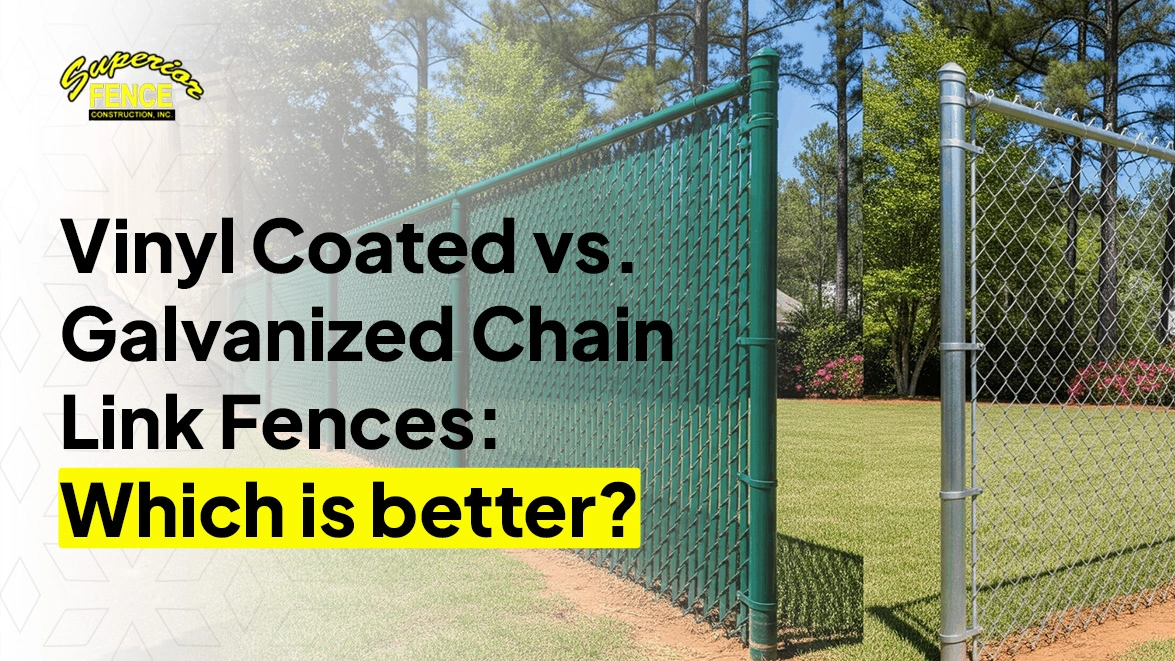
A galvanized chain-link fence features steel wire that manufacturers coat with zinc. Zinc protects the fence from corrosion in rain and other weather conditions. The fact is that both homeowners and business owners choose galvanized fencing for their projects, as it provides long-lasting protection at a very affordable price with minimal maintenance. Normally, people use this material in backyards, warehouses, schoolyards, and other commercial environments. The fence is a basic silver color, which gives it the industrial look you would not get from more decorative fencing.
Understanding Vinyl-Coated Chain Link Fencing
Vinyl-coated chain-link fencing is constructed from galvanized steel, which is then coated with vinyl to produce the final product. This additional layer protects the fence from moisture, scratches, and weather damage while enhancing its visual appeal. Vinyl-coated fencing is used by property owners around residential areas, parks, schools, and anywhere that you need a clean appearance. The darker color options require minimal maintenance and are durable in outdoor conditions, making them a favorite among many.
Vinyl Coated vs. Galvanized Chain Link Fences: Which Is Better for Durability?
Durability is one of the biggest factors homeowners and property managers consider before installing a chain link fence.
Rust and Corrosion Resistance
Vinyl-covered chain link fences generally offer more rust protection. This additional coating prevents moisture from ever reaching the metal finish directly. While it still effectively withstands corrosion, scratched-off or damaged sections will eventually rust after many years of exposure.
Performance in Rain, Humidity, and Snow
Both fence types are excellent for use outside, but of course, the climate can affect how long they last. Vinyl-coated fencing is often better suited to humid areas and coastal areas, simply because the additional layer reduces moisture exposure. Galvanized fences are reliable in nearly all weather conditions, though if left exposed to constant heavy moisture for an extended period, they may rust over time.
Resistance to Scratches and Surface Damage
Since the metal surface remains exposed, galvanized fences are more likely to scratch. Vinyl-coated fencing is also better protected against light hits and damage to the surface. The outer layer also reduces the appearance of damage, allowing the fence to look cleaner for long periods.
Lifespan Expectations for Both Fence Types
Under the correct conditions and with proper maintenance, a well-made galvanized chain link fence should last approximately 15 to 20 years. Vinyl-coated fencing utilizes that extra layer of protection, which can help its life expectancy. In a moderate climate, some vinyl-coated fences might last for many years.
Maintenance Requirements Over Time
Unlike vinyl fencing, which is supposed to last a lifetime if maintained well, galvanized fencing needs to be inspected at least once per year for areas of rust and broken sections. Vinyl-coated fences typically need less maintenance since the coating on top of the fencing reduces corrosion and surface wear.
Strength and Security Performance
The strength and security of both types make them ideal for a home or business. Both are made out of steel wire, so they perform similarly structurally. The strength of the fence is more dependent on the quality of the posts, the type of wire used, and how the fence is installed rather than on the coating itself.
Vinyl Coated vs. Galvanized Chain Link Fences: Cost and Long-Term Value
Cost plays a major role when choosing between vinyl-coated and galvanized chain link fencing.
Initial Installation Costs
Galvanized chain link fence is less expensive to install in general due to the lack of finishing material. Since the vinyl-coating process generally gives a more stylish appearance, this type of fencing is often more expensive. In terms of labor costs for both types of fence, they typically cost around the same.
Long-Term Maintenance Expenses
Rust treatment and repair work could be necessary because galvanized fencing will rust over the years, especially in very humid climate settings. Vinyl-coated fencing requires less maintenance since the outer coat reduces moisture in the metal and surface damage. Less maintenance typically decreases long-term ownership costs.
Repair and Replacement Considerations
The repair expenses will depend on two factors, which are the level of destruction and the age of the fence. Damage to galvanized fencing leads to rust formation, while vinyl-coated fencing develops cracks and peeling after extended use. Replacing destroyed vinyl-coated sections becomes costly because matching the original vinyl color and coating is challenging.
Cost Differences Based on Fence Size
Both options cost a little more for larger fencing projects because they impact material and labor costs. As the vinyl coating increases the cost per foot, large scale commercial or industrial areas often specify galvanized fencing to minimize total project costs. Smaller residential projects may absorb the additional vinyl coating cost more easily.
Long-Term Value for Residential Properties
Vinyl-coated fencing often provides stronger long-term value for homeowners, as it enhances curb appeal and requires little maintenance. It is generally cleaner in appearance and tends to maintain a fresh finish longer, making it ideal for front and back yards that are visible.
Which Fence Offers Better Return on Investment
The better investment is based on your property objectives and respective climate conditions. A galvanized fence provides great value when cost is a primary focus, along with other requirements for security. A vinyl-coated fence may provide a stronger return down the road for residences where appearance and low-maintenance are of more concern.
Which One Should You Choose?
The choice between galvanized and vinyl-coated chain link fencing depends on four factors, which include property use, climate, available budget, and expected future activities on your property. Both security options deliver dependable protection to different types of environments.
- The vinyl-coated fence is the optimal choice for residential areas because it maintains a cleaner appearance and offers contemporary aesthetic appeal.
- Businesses and industrial facilities select galvanized fencing because they prioritize strength &and affordable installation costs over visual attractiveness. The protective coating on vinyl-coated chain-link fences provides superior protection in humid and coastal climates by reducing corrosion through its barrier.
- Budget-conscious projects frequently adopt galvanized fencing because it provides lower initial costs while maintaining reliable strength properties. Vinyl-coated fencing is a low-maintenance option that requires minimal upkeep throughout its lifespan. This solution enables any homeowner to establish future yard maintenance without requiring additional efforts.
- Homeowners who seek to maintain their property through prolonged periods of time choose vinyl-coated fencing because it presents an appealing appearance that blends naturally with their outdoor environment.
Conclusion
When comparing vinyl-coated vs. galvanized chain link fences, the best option depends on your available budget, the weather conditions, and your future maintenance requirements. Galvanized fencing provides affordable security through its durable materials, whereas vinyl-coated fencing delivers superior visual appeal together with enhanced protection against weather and corrosion damage.
Superior Fence offers both options of chain link fences to help homeowners choose the right chain link fence based on their property needs, durability goals, and long-term performance expectations.
FAQs
Which chain link fence works best for residential properties?
Usually, vinyl-coated link fences work best for homes because they have a cleaner look and are more likely to blend in with outdoor landscapes. As time passes, they require far less visible maintenance, which is why many homeowners recommend them.
Can vinyl-coated chain link fences fade over time?
Yes, although it indicates a cheap vinyl coating was used.. High-quality vinyl-coated fences are designed to withstand fading, degradation, and fraying for a considerable amount of time with optimal care.
Are galvanized fences strong enough for commercial security?
Yes, it is a popular solution for securing commercial and industrial areas, as it provides strength and protection at lower costs than many alternatives offer.
What fence type performs better in humid climates?
In humid climates, vinyl-coated chain link fences perform especially well because the added layer of protection reduces exposure to moisture and minimizes corrosion. This additional protection commonly extends the life of your fence in moist settings.