Installing a new fence around your residential property adds privacy, keeps children or pets safe, and boosts curb appeal for your neighborhood. If your home sits inside a planned subdivision in Oklahoma City, purchasing raw materials right away can lead to trouble with your neighborhood board. So, what is actually allowed for fences in Oklahoma City HOAs? Many neighborhood associations allow common options, such as six-foot wooden privacy panels, decorative aluminum, or vinyl, but the specific materials and designs permitted depend on the community. You should submit an application for review before building, and you will also need an official city permit.
Table of Contents
ToggleKey Takeaways
- Neighborhood covenants strictly dictate structural heights, acceptable supplies, design profiles, and yard placements well beyond basic city rules.
- If your community requires architectural approval, you should submit an application and receive written clearance before buying materials or starting construction.
- Following established subdivision fencing guidelines keeps your property compliant, protects resale values, and prevents expensive tear downs.
- City rules covering property lines, intersection sight triangles, and utility easements take priority even if your board passes your layout.
- Building without required board approval may lead to violation notices, monetary penalties permitted under the governing documents, or required modification or removal of the fence.
Common HOA Fence Regulations
Every neighborhood runs on its own specific rulebook, known as Covenants, Conditions, and Restrictions (CC&Rs). Many Oklahoma City communities regulate similar details, including fence height, materials, placement, and overall appearance.
Architectural Review Committees evaluate each proposed project carefully to confirm that newly constructed barriers blend seamlessly with established block aesthetics. Taking time to review these local neighborhood guidelines before making purchasing decisions saves homeowners significant stress during material selection.
1. Architectural Approval and City Permits
Never start digging before getting written clearance from your HOA board. Depending on the community, the committee may ask for an application packet that includes:
- A copy of your property survey map marking where posts will go.
- Total length and height dimensions for every section.
- Material samples, brochure photos, or stain color swatches.
Along with any required HOA clearance, Oklahoma City requires a residential fence permit for new fence construction. The city reviews the submitted plans for applicable requirements, including property lines, easements, right-of-way, and sight-distance requirements.
The HOA reviews the project against its own community standards, while the city reviews it for applicable code requirements. If HOA approval is required, obtain both the necessary HOA approval and city permit before construction begins.
2. Approved Construction Materials
Associations regulate materials so every lot on the street maintains a clean, uniform look throughout the entire subdivision.
- Western Red Cedar Wood: Cedar is a popular choice for Oklahoma fences because of its natural resistance to decay and its ability to handle changing weather conditions when properly maintained over time.
- Wrought Iron and Decorative Aluminum: Some neighborhoods may require open metal fencing near shared ponds, greenbelts, or golf courses to preserve visibility. Metal fencing keeps scenic views clear while securing the yard effectively.
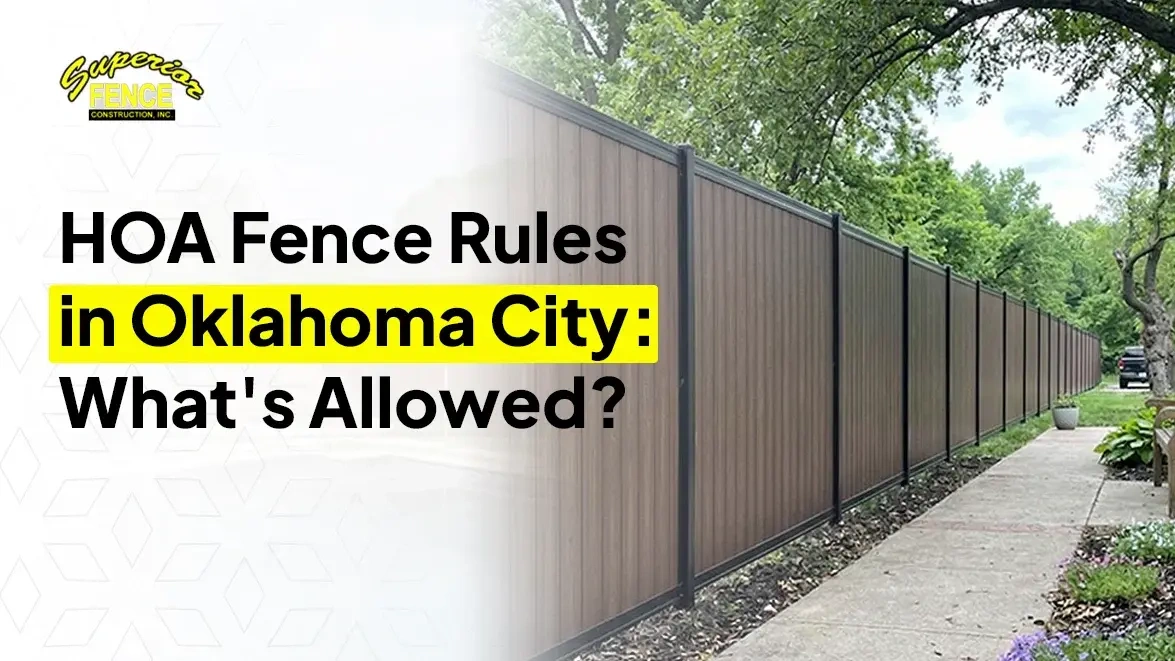
- Vinyl and Composite Panels: Many newer developments allow low maintenance vinyl panels for homeowners. However, committees generally restrict choices to simple neutral shades like white, tan, or light gray.
- Banned Materials: Some HOAs restrict chain link, wire mesh, corrugated metal, or other materials based on their appearance and specific community guidelines.
3. Height Limits and Backyard Rules
Height allowances depend heavily on where the physical barrier sits relative to your property lines and primary structure.
- Backyard Privacy Boundaries: Many HOAs limit backyard privacy fences to six feet tall, but the exact height allowed depends on the community’s governing documents. City code allows up to eight feet under applicable conditions but your HOA’s stricter six-foot rule is what you must follow.
- Front Yard Rules: Some Oklahoma City subdivisions may restrict or prohibit front-yard enclosures entirely. Where front-yard fencing is permitted, applicable zoning or design standards may limit its height and require designs that preserve visibility for surrounding neighbors.
- Corner Lots: Corner lots must comply with Oklahoma City’s sight-distance requirements so fences do not obstruct visibility at street intersections.
4. Fence Maintenance and Repair Obligations
Building your fence is only the very first step of property management. Maintaining structure integrity according to neighborhood expectations remains an ongoing obligation across most Oklahoma City HOAs. Board members routinely send out formal notices whenever perimeter structures show signs of leaning, rotting, or severe structural fading.
- Mandatory Staining and Sealing Schedules: Some associations may specify how often fences must be cleaned, stained, sealed, or repaired to maintain visual appeal.
- Prompt Repairs for Storm Damage: An HOA may set a firm deadline for addressing severe storm damage or other noticeable violations, depending on its governing documents.
- Replacement Approval Rules: If a severe storm completely destroys your existing boundary line, you cannot automatically rebuild using different specs. Replacing a fence with a new style, material, or height requires going through the full architectural approval process all over again.
- Shared Neighbor Expenses: Responsibility for a shared property-line fence depends on property legal documents, HOA bylaws, and any informal agreement reached between neighboring homeowners.
5. Stains, Paint Colors, and the Good Neighbor Rule
Even when an association permits standard lumber construction, board rules frequently dictate exact finishing methods and exterior colors.
- Approved Stains: Most committees require clear protective sealers or natural wood tones such as cedar and light oak. Brightly painted finishes or dark black stains are rarely permitted within suburban developments.
- The Good Neighbor Rule: Some HOAs specify which side of the fence should face outward toward public streets or neighboring properties, so check your community’s architectural guidelines carefully before scheduling installation day.
6. Property Lines, Setbacks, and Utility Access
Accidentally building even a few inches over your official property line introduces severe legal headaches and costly boundary disputes.
- Property Line Surveys: Boards often require a professional survey map to verify that proposed layouts sit entirely within legal lot boundaries. Building across a property line can require the fence to be relocated or completely removed.
- Utility Easements: If a utility provider needs access to a recorded easement, fencing within that area may need to be temporarily removed or affected by ongoing maintenance work, so check easement terms thoroughly prior to digging post holes.
Conclusion
Building a new residential fence remains a fantastic way to make your outdoor living area substantially more private, safe, and functional for family activities. To avoid unnecessary roadblocks during construction, begin by reading your neighborhood CC&Rs and initiating early dialogue with board members.
Partnering with experienced local professionals like Superior Fence Construction simplifies navigating city permits, boundary checks, and neighborhood guidelines. Following established subdivision fencing guidelines keeps your project running smoothly on budget, protects surrounding property values, and guarantees your newly installed barrier remains fully compliant for years down the road.
FAQs
What happens if I install a fence without HOA approval?
Your HOA may issue violation notices, impose monetary penalties allowed under its governing documents, or require an unapproved fence to be removed entirely. An unresolved HOA violation can also create complications when you want to sell the property to prospective buyers.
How long does HOA fence approval take in Oklahoma City?
HOA approval times vary significantly by community, so check your association’s specific architectural review timeline before scheduling professional installers. Submitting complete site maps, material specifications, and stain swatches during initial application speeds up committee decision times.
Does Oklahoma City require a permit for residential fences?
Yes, Oklahoma City requires a residential fence permit for new builds. You should secure your HOA approval letter first, then submit your detailed plans to the city development office for official permit processing.