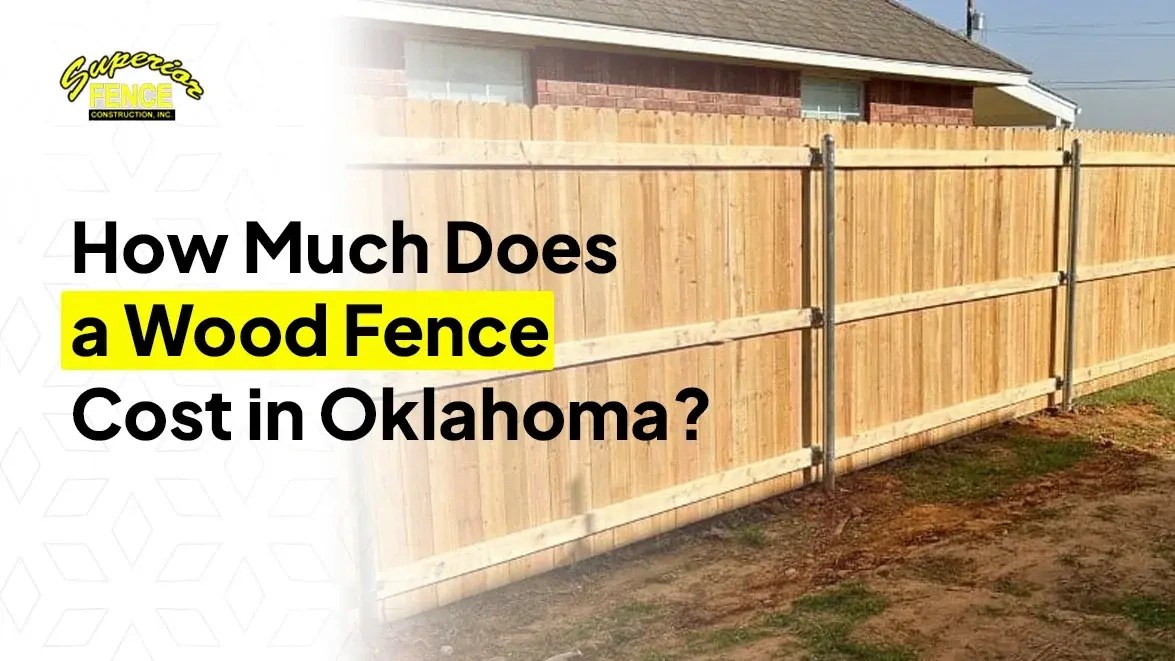
A wood fence in Oklahoma typically costs $15–$40 per linear foot, depending on the materials and installation. That gives you a useful starting point before you measure your yard. Yet a straight boundary on level ground won’t cost the same as a sloping property with an old fence to remove.
Wood type, gate hardware, and the height of your panels also shape the quote. Oklahoma’s wind and hot summers make construction details worth checking closely. Before choosing the cheapest option, look at what’s included and how much upkeep your fence may need in the future.
|
Table of Contents ToggleKey Takeaways
|
The price ranges mentioned are general estimates for informational purposes only, not final quotations. Contact Superior Fence for a personalized quote tailored to your project.
What Is the Average Wood Fence Cost in Oklahoma?
Most homeowners can use $15–$40 per linear foot for initial budgeting. Your actual price depends on the materials and installation requirements.
Here’s what different fence lengths could cost:
| Fence length | Estimated wood fence cost |
| 100 linear feet | $1,500–$4,000 |
| 150 linear feet | $2,250–$6,000 |
| 200 linear feet | $3,000–$8,000 |
These figures are illustrative calculations using the general pricing range. They aren’t fixed costs for every property.
How to Calculate Your Wood Fence Cost
Start by measuring the sections you want fenced. Add their lengths to determine your total linear footage. For example, suppose your backyard needs 150 feet of fencing. Multiplying that length by $15–$40 gives you $2,250–$6,000. Next, check whether your estimate includes gates and old fence removal. These details can change your final bill considerably.
Wood Fence Cost by Material Type
Wood type influences both installation expenses and future maintenance. Understanding the differences helps you choose a suitable option.
Cedar Fence Cost
Cedar fencing typically costs $20–$35 per linear foot, including materials and installation. A 100-foot cedar fence may therefore cost approximately $2,000–$3,500. Cedar contains natural compounds that help resist decay and insects.
Pressure-Treated Pine Fence Cost
Pressure-treated pine offers another option for budget-conscious homeowners. Manufacturers treat the timber to improve resistance against decay and insects. However, treatment doesn’t eliminate moisture movement or maintenance requirements.
Other Wood Fencing Options
Premium hardwoods and custom timber designs can increase material expenses. Availability also influences what local contractors can supply. Remember that fence style matters alongside wood species. A simple picket fence requires different materials from solid privacy fencing.
What Factors Affect Wood Fence Installation Costs?
Two similar Oklahoma properties can receive noticeably different quotes. Several construction details reveal why installation prices vary.
Fence Height and Length
Longer boundaries require additional boards, rails, posts, and labor. Taller privacy fences also need more material than shorter designs. For example, a six-foot enclosure uses more timber than a four-foot boundary. Its supporting structure must also suit the additional height.
Wood Quality and Fence Design
Timber grade affects appearance, durability, and material costs. Higher-grade boards generally contain fewer visible defects. Design choices also influence how much wood you need. Board-on-board fencing uses overlapping boards to provide better privacy. Decorative tops and custom patterns can increase installation complexity.
Labor and Installation Complexity
Professional installation involves measuring, excavation, post setting, and panel assembly. Your contractor must also account for access and site conditions. Narrow entrances may make transporting materials more difficult. Complex layouts can require additional cutting and careful measurements.
Ground Conditions and Property Layout
Rocky soil and uneven ground can complicate post installation. Tree roots and buried obstacles may require adjustments. Sloping gardens also need careful planning to maintain suitable fence alignment. Some designs follow the terrain while others use stepped sections.
Gates and Additional Features
Gates need appropriate framing, hinges, and secure closing hardware. Wider entrances may require stronger supporting posts. Decorative finishes and custom gate designs add further expense. Confirm whether your contractor prices these features separately.
What Additional Costs Should You Consider?
Your fence budget may need room for more than construction. Some projects involve preparation work and ongoing upkeep.
Old Fence Removal and Disposal
Replacing an existing fence means removing old panels and posts. Your contractor may also need to extract concrete foundations. Disposal charges depend on the amount of unwanted material. Ask whether removal and waste disposal are included in the quote.
Fence Permits and Property Requirements
Oklahoma City requires permits for fence construction and certain alterations. Other municipalities may have different rules and application fees. Check your local requirements before scheduling installation. You should also confirm property boundaries and any neighborhood association restrictions. A boundary survey may become necessary when ownership lines remain unclear.
Staining, Sealing, and Finishing
Protective finishes help limit moisture absorption and preserve the timber’s appearance. Some installations include finishing, while others charge separately. Ask whether your new fence needs drying before treatment. The appropriate waiting period depends on the timber and product instructions.
How Does Oklahoma’s Weather Affect Wood Fence Costs?
Oklahoma’s changing weather makes thoughtful fence construction particularly important. Choosing suitable materials can help reduce avoidable repairs.
Strong Winds and Storm Damage
Strong winds place considerable pressure on solid privacy panels. Posts, foundations, and connections must suit the fence design. Discuss suitable post depth and structural support with your contractor. No ordinary wooden fence can guarantee protection against extreme storms.
Summer Heat and Moisture Exposure
Intense sunlight can fade finishes and dry exposed timber. Meanwhile, changing moisture levels can cause boards to swell or shrink. Protective treatments help manage weather exposure when applied correctly. Choose products suitable for your timber and local conditions.
Long-Term Maintenance Requirements
Inspect your fence regularly for loose boards and damaged posts. Check areas where moisture collects near the ground. Prompt repairs can prevent small problems from becoming expensive replacements. Follow your finish manufacturer’s recommendations for cleaning and reapplication.
How Can You Save Money on Wood Fence Installation?
Smart planning can reduce unnecessary expenses without compromising construction quality.
Choose a Simple Fence Design
Straight fence lines generally require less complicated installation work. Standard designs may also reduce cutting and material waste. Avoid unnecessary decorative features when working within a tight budget.
Select the Right Wood for Your Budget
Compare initial material prices with future maintenance requirements. A cheaper option isn’t always economical over several years. Choose suitable timber for exposed sections and ground-contact posts.
Compare Detailed Installation Quotes
Request quotations covering the same materials, dimensions, and installation work. Otherwise, comparing the final prices tells you very little. Check whether each estimate includes gates, disposal, and finishing. Ask about unexpected ground conditions before approving the project. A clear quotation helps you avoid unpleasant surprises later.
Conclusion
Planning your fence budget becomes easier when you know the likely range. In Oklahoma, wood fencing commonly costs $15-$40 per linear foot. Cedar usually falls around $20-$30 per foot, including typical installation costs.
However, taller panels, custom gates, difficult soil, and old fence removal can increase the total. You should also consider finishing and future maintenance before choosing materials. A clear quote lets you compare contractors on equal terms. It also helps you avoid hidden extras later.
When you’re ready to move forward, contact Superior Fence Construction for a free estimate based on your specific property, design preferences, and installation needs.