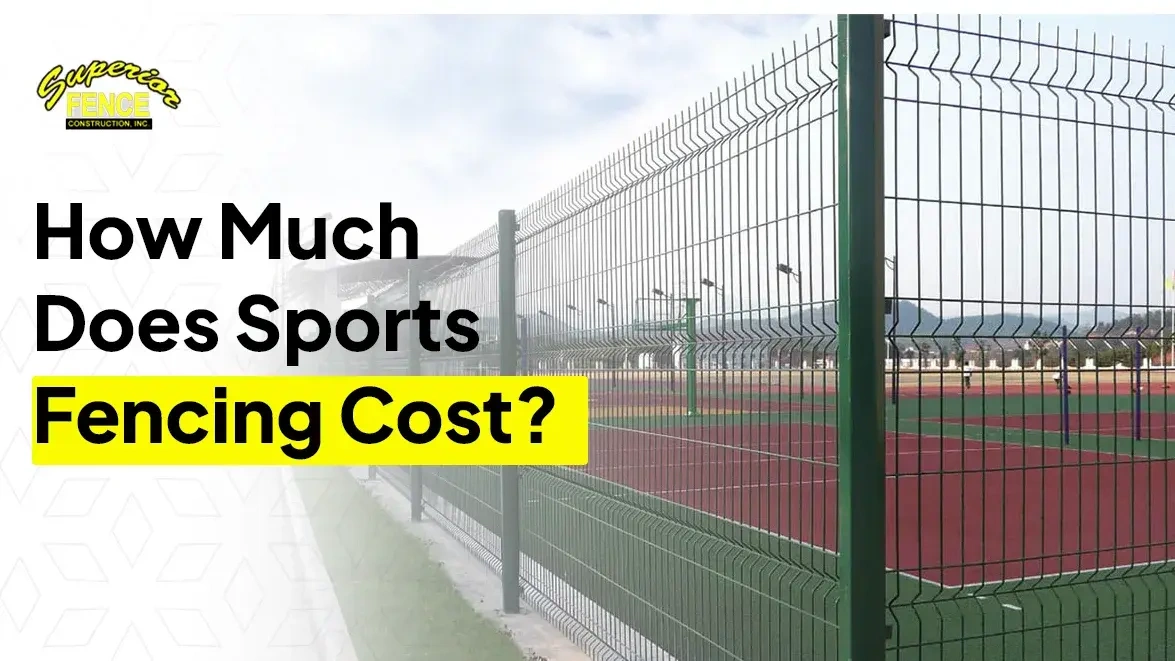
Sports fencing typically costs $5,000–$15,000 for a standard sports area, depending on its size and design. That range offers a useful starting point, not a fixed price. A simple boundary needs fewer materials than a tall court enclosure. Gates, ground conditions, and protective features can also change the final bill.
If you’re budgeting for a school pitch, tennis court, or local sports facility, start with the fence’s purpose. Once you know what it must contain and protect, you can compare suitable materials, calculate your perimeter, and request a meaningful installation quote.
Key Takeaways
|
Table of Contents
ToggleWhat Is the Average Sports Fencing Cost Per Foot?
Basic chain-link sports fencing generally costs $10–$30 per linear foot. Taller installations can reach $50 or more per foot. However, the total price depends on your facility’s specific requirements.
Here’s a quick breakdown of typical installation costs:
| Sports fencing option | Estimated cost |
| Basic chain-link fencing | $10–$30 per linear foot |
| Taller tennis or baseball fencing | $50+ per linear foot |
| Standard sports area installation | $5,000–$15,000 |
A linear foot measures the fence’s length, not its height. Therefore, 200 feet of fencing means 200 feet along your boundary.
These figures provide a preliminary budget rather than a final quotation. Specialized backstops, difficult terrain, and additional equipment may increase expenses considerably.
How to Calculate Your Sports Fencing Cost
Start by measuring the total length of your proposed fence. Multiply that measurement by the estimated price per linear foot. For example, suppose your facility needs 300 feet of basic chain-link fencing.
- Lower estimate: 300 × $10 = $3,000
- Higher estimate: 300 × $30 = $9,000
That gives you a preliminary fencing estimate of $3,000–$9,000. However, confirm which materials and installation services the quoted rate includes. Gates and additional features may require separate allowances.
Sports Fencing Costs by Facility Type
Different sports place different demands on their boundary fencing. A basketball court needs different protection than a baseball field. Consequently, choosing the right design matters just as much as choosing the right materials.
Tennis Court Fencing
Tennis courts need fencing that keeps stray balls within the playing area. Taller enclosures often require stronger posts and additional mesh. Vinyl-coated chain-link fencing provides visibility and a suitable playing background. Windscreens can also improve privacy and reduce distractions during matches. These additions influence costs, particularly when taller sections need reinforced supports.
Baseball and Softball Field Fencing
Baseball fields often need several fencing systems working together. Outfield boundaries, dugout enclosures, and backstops serve different purposes. A tall backstop helps protect spectators behind home plate. Its foundations and supporting structure may require specialized engineering. As a result, a complete baseball installation can exceed standard perimeter fencing estimates.
Football and Multi-Sport Field Fencing
Large playing fields often have extensive boundaries to secure. Their total fencing length can quickly increase installation expenses. However, not every section necessarily needs the same height. Areas near entrances or neighboring properties may require different protection. Discuss these requirements before selecting a uniform fence design.
Basketball Court Fencing
Outdoor basketball courts benefit from secure boundaries and practical entry points. Suitable fencing helps contain loose balls and separates nearby activities. Higher sections may prove useful where balls frequently leave the court. For shared recreation areas, consider access gates and pedestrian movement. These details can affect both installation costs and everyday convenience.
What Factors Affect Sports Fencing Costs?
The cheapest material doesn’t always produce the lowest overall cost. Several installation details can change your budget considerably. Understanding these factors helps you compare quotes more confidently.
1. Fence Height and Length
Longer fences require more mesh, posts, fittings, and installation labor. Taller structures also need suitable foundations and stronger supporting components. For example, a short boundary may contain rolling footballs effectively. However, a high tennis enclosure needs more substantial construction. Measure different sections separately when their height requirements vary.
2. Fencing Material and Wire Gauge
Chain-link fencing remains a common choice for sports facilities. Its flexible mesh provides visibility and withstands everyday sporting activity. Galvanized steel offers corrosion protection through its zinc coating. Vinyl-coated chain-link provides an additional finish and different color options. Heavier wire can improve strength, but it also increases material costs. Always compare wire thickness alongside coating quality and post specifications.
3. Gates and Protective Features
A fence rarely consists of uninterrupted mesh alone. Most facilities need pedestrian gates and maintenance access.
Additional features may include:
- Protective padding around exposed posts and vulnerable playing areas.
- Windscreens that improve privacy and reduce certain wind effects.
- Ball-containment netting behind goals or other high-impact areas.
- Wider gates for maintenance vehicles and groundskeeping equipment.
Remember that windscreens also increase wind pressure on fencing. A contractor should assess whether additional structural support is necessary.
4. Ground Conditions and Site Preparation
Uneven ground can complicate even a straightforward fencing project. Rocky soil may require specialized excavation equipment and additional labor. Existing concrete, buried utilities, and vegetation can also affect installation. If you’re replacing an old fence, include removal costs. Clearing the site before installation may involve further expenses.
5. Labor and Installation Complexity
Professional installation involves more than attaching mesh to posts. Contractors must prepare foundations, position supports, and tension fencing correctly. Complex corners, restricted access, and unusually tall structures require additional work. Local labor rates and project scheduling can also influence pricing. Request a site assessment before finalizing your installation budget.
What Should a Sports Fence Installation Quote Include?
A detailed quote helps you understand what you’re purchasing. Without one, comparing contractors can feel like comparing apples and oranges.
Before approving a proposal, check these important details:
- Materials: Confirm mesh type, wire gauge, coating, and post specifications.
- Dimensions: Check the total fence length and height of each section.
- Installation: Confirm foundations, fittings, labor, and site preparation.
- Additional features: Identify gate, padding, and netting costs separately.
- Project conditions: Ask about removal, disposal, and any required permits.
Check whether the quotation includes applicable taxes and delivery charges. Also request estimated completion dates and relevant warranty information.
Most importantly, clarify whether specialist backstops require separate quotations.
How to Estimate Your Sports Fencing Budget
Accurate budgeting begins with understanding your facility’s actual requirements. A rough measurement alone won’t capture every installation expense.
Measure Your Fence Perimeter
Measure each boundary section before calculating your total length. Record different heights and identify entrances along the proposed route. Remember to include shorter sections around equipment or spectator areas.
Calculate the Preliminary Cost
Multiply your measured length by the appropriate fencing rate. Use the resulting figure as your initial planning estimate. For example, 400 feet of basic chain-link fencing could cost $4,000–$12,000. However, taller sections and specialized equipment may change this figure.
Account for Additional Requirements
Ask your contractor to identify costs beyond the basic fence. These might include gates, removal work, and unusual ground conditions. Separating these expenses makes future budget adjustments easier.
How Can You Save Money on Sports Fencing?
You can control installation expenses without compromising essential safety requirements. Start by matching your fence design to its intended purpose.
Choose Suitable Materials
Basic chain-link fencing often offers an economical boundary solution. Consider galvanized or vinyl-coated options according to your maintenance needs.
Avoid paying for decorative finishes that provide little practical value.
Plan Your Layout Carefully
An efficient layout can reduce unnecessary fencing and awkward corners. Place entrances where they support convenient access and maintenance. However, don’t sacrifice safe playing clearances to save materials.
Maintain Your Existing Fence
Regular inspections can help identify problems before they worsen. Look for loose mesh, damaged posts, and failing gate hardware. Repairing isolated damage may extend your fence’s useful life. Where structural problems persist, ask a professional about replacement options.
Conclusion
Sports fencing costs depend on your boundary requirements and site conditions. Basic chain-link options typically cost $10–$30 per linear foot. Taller tennis or baseball fencing can reach $50 or more.
A standard sports area may cost $5,000–$15,000 overall. Measure each section carefully and allow for additional installation requirements. Comparing detailed quotes helps you identify missing costs before work begins. Your chosen fence should also suit your sport and maintenance needs.
For a clearer price based on your facility, contact Superior Fence Construction for a free sports fencing estimate. Its experienced team can discuss suitable materials, assess your site, and recommend an installation that meets your requirements.