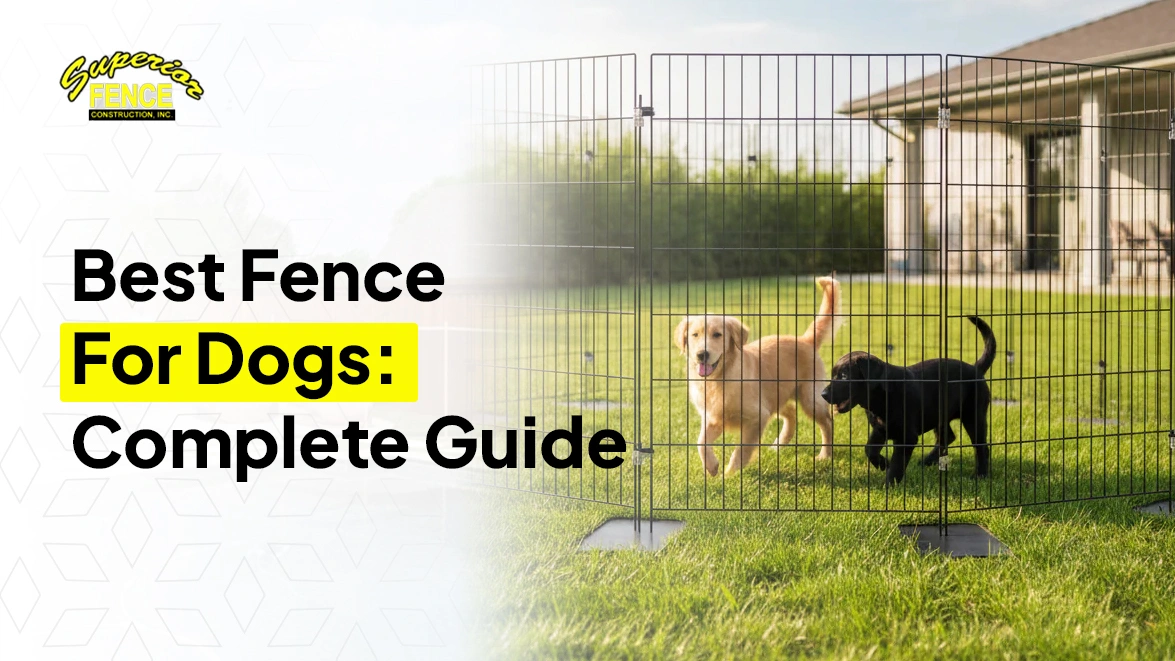
The best fence for dogs depends on the dog. A four-foot picket fence works fine for a Cavalier King Charles Spaniel but does nothing for a German Shepherd that can clear five feet without breaking stride. Before looking at fence materials or costs, the dog’s size, behavior, and escape tendencies should be considered n. Get those factors right first and the fence choice becomes a lot simpler for you.
Table of Contents
ToggleCore Takeaways
- The best dog fence depends on the dog’s size, jumping ability, digging habit, and how determined it is to get out.
- Wood privacy fences and vinyl fences are the most popular choices because they block sightlines, which reduces fence running and barrier frustration in most dogs.
- Chain link is affordable and durable but doesn’t suit dogs that climb or react to visual triggers from outside the yard.
- Six feet is the recommended minimum height for large breeds and any dog with a history of jumping.
- Invisible fences work for some dogs and fail completely for others. They’re not a substitute for a physical barrier in most situations.
What to Consider Before Choosing a Dog Fence
The fence needs to suit the dog in your yard, not just the average dog. Here is what actually shapes the decision.
Dog Size and Breed
Small dogs need less height but sometimes more attention to the gap size at the bottom and between fence boards. Large breeds need height first. Working breeds, herding dogs, and high-energy breeds are more likely to test the fence repeatedly than lower-energy companion breeds. Know what you’re working with before picking a material or height.
Jumping and Climbing Ability
Some breeds are known for jumping high. Huskies, Belgian Malinois, Greyhounds, and Labradors are all capable of clearing four to five feet without much effort. If the dog has jumped a fence before, assume it will do it again. Six feet is the safe minimum for jumpers. Dogs that climb need an inward lean or roller system added to the top of whatever fence goes in.
Digging Behavior
A dog that digs needs a fence with something preventing exit at ground level. Options include burying the fence base six to twelve inches underground, adding a concrete footer, laying a wire mesh apron along the inside of the fence line, or using heavy gravel along the perimeter. None of these are complicated, but skipping them with a known digger creates an obvious problem.
Yard Size and Layout
Larger yards with more perimeter to cover push the budget toward more affordable materials, like chain link or welded wire. Smaller yards where aesthetics matter more often justify the cost of wood or vinyl. Irregular yard shapes, slopes, and existing landscaping all affect installation complexity and cost.
Budget and Long-Term Costs
Chain link and welded wire cost the least upfront. Wood sits in the middle but needs ongoing maintenance. Vinyl costs more upfront but needs almost nothing long-term. Aluminum falls between wood and vinyl in terms of cost and maintenance. Factor in the full lifespan cost, not just the installation quote when comparing options.
Best Fence Types for Dogs
Here is how each option actually performs with dogs day to day.
Wood Privacy Fence
Solid wood privacy fencing is one of the most effective options for dogs that react to visual stimuli. No gaps means the dog can’t see what’s happening on the other side, which significantly reduces fence running, barking, and barrier frustration. Six foot height contains most breeds. The downside is maintenance. Wood needs sealing or staining every few years and boards can warp or rot in wet climates without proper upkeep.
Vinyl Fence
Vinyl delivers the same visual barrier as wood without the maintenance. It doesn’t rot, warp, or need painting. Dogs can’t splinter it the way they can wood. The surface is smooth, which makes it harder to climb than chain link. It costs more upfront but over ten years the maintenance savings usually make up the difference. It’s a good option for most breeds and yard sizes.
Chain Link Fence
Chain link is the most affordable, durable option for large perimeters. It’s strong, holds up in most weather, and lasts for decades without much maintenance. The problem is visibility. Dogs that react to people, other dog, or wildlife outside the fence have a direct line of sight through the chain link, which can drive fence running and frustration. Climbers can also get purchase on the links. Adding privacy slats helps with the visual issue but doesn’t solve the climbing problem.
Aluminum Fence
Aluminum suits yards where appearance matters and the dog isn’t a serious escape risk. It looks clean, doesn’t rust, and needs almost no maintenance. The gaps between pickets are a limitation. Small dogs can sometimes squeeze through standard spacing and determined larger dogs may be able to bend or damage poorly installed or lightweight panels over time. Though it works well for dogs that aren’t actively trying to escape, it isn’t the most secure option for problem dogs.
Welded Wire Fence
Welded wire is a practical option for large rural properties where perimeter coverage matters more than aesthetics. It’s strong, relatively affordable and holds up well. Not the best choice for determined escape artists or climbers, it is suitable for dogs that aren’t actively testing the fence. It’s often used in combination with a more decorative front fence.
Electric or Invisible Fence
Invisible fences use a buried wire and a receiver collar to create a boundary that the dog learns to respect. They work well for some dogs and are less effective for others. A dog focused enough on getting out will push through the shock to get to whatever it’s after. They also do nothing to keep other animals or people out of the yard. Though worth considering as a secondary measure, it’s not a reliable standalone solution for most dogs.
Best Fence Materials by Dog Type
Different dogs have different needs. Here is what works best for specific situations.
Best Fence for Small Dogs
A vinyl or wood privacy fence at four feet is usually sufficient for most small breeds. The priority is closing off any gap at the bottom since small dogs can squeeze through surprisingly tight spaces. Check the spacing between any pickets or rails carefully before installing.
Best Fence for Large Dogs
A six-foot solid wood or vinyl privacy fence is best. Height is the main factor and a solid panel with no footholds or sightlines suits large active breeds better than open style fencing. For very large or powerful breeds, make sure posts are set deep enough to handle pressure against the fence panels.
Best Fence for Aggressive Chewers
Vinyl or chain link withstand chewing the most. Wood gets gnawed through faster than most owners expect with a determined chewer. Vinyl is harder and less satisfying to chew, which discourages most dogs. Chain link is essentially impossible to chew through. Aluminum is also a solid option since dogs rarely target metal the way they do wood.
Best Fence for Escape Artists
For those dogs that don’t like to be contained, a six-foot vinyl or wood privacy fence with a concrete footer or buried wire apron along the base for diggers. Add coyote rollers or an inward lean at the top for jumpers and climbers. The goal is to remove every viable exit point rather than relying on height alone. A dog that wants out badly enough will find the weakest point in any fence, so the installation needs to be thorough.
Conclusion
Picking the best dog fence starts with understanding exactly what the dog is likely to do and building around that. Height for jumpers, solid panels for reactive dogs, buried bases for diggers, and chew-resistant materials for dogs that go after the fence itself. Get those basics right and the fence does its job without becoming a recurring problem. If you’re ready to get the right fence installed for your yard and your dog, reach out to Superior Fence Construction for an estimate.
FAQs
What is the most escape-proof fence for dogs?
A six-foot solid vinyl or wood privacy fence with a buried wire apron along the base and coyote rollers at the top covers most escape methods.
How tall should a fence be for a large dog?
Six feet is the minimum for most large breeds. For known jumpers or working breeds that are particularly athletic, consider adding height or an inward lean at the top rather than relying on height alone.
Can dogs break through a vinyl fence?
Standard vinyl fencing holds up well against most dogs. Aggressive chewers can damage vinyl over time but it’s significantly more resistant than wood. Very large powerful dogs can crack vinyl panels if they hit them with enough force repeatedly.