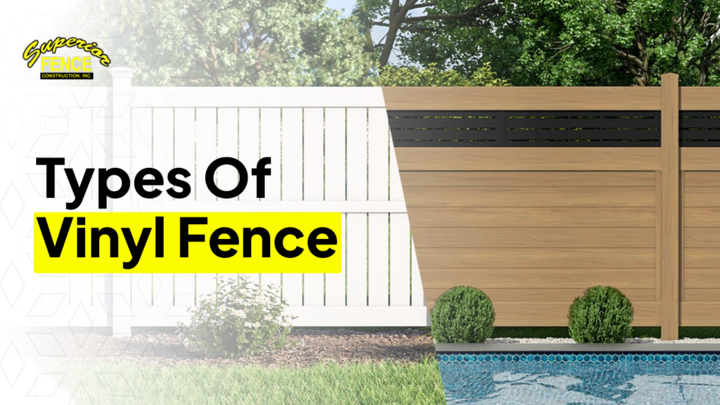
Vinyl fencing covers far more than the standard full-privacy panel most people picture. There are several types of vinyl fence, each designed for a different purpose: total privacy, open boundaries, airflow, curb appeal, or a combination of all. Some homeowners opt for classic privacy vinyl fencing to block out noise and unwanted views. Others prefer a ranch-style three-rail fence that keeps the yard open and airy.
Many opt for a middle ground, such as a tall vinyl fence with a lattice accent or a clean vinyl picket design. And when none of the standard options feel quite right, custom vinyl fencing blends different styles into one. Knowing these choices upfront makes it much easier to pick the fence that fits your home and the way you use your outdoor space.
Table of Contents
ToggleCommon Vinyl Fencing Options
The styles below represent the most common vinyl fencing options people choose when they want durability, low maintenance, and a design that fits their home’s layout.
1. Classic Privacy Vinyl Fence
Privacy vinyl fencing is the go-to choice for homeowners who want a backyard that feels completely closed off. These tall, interlocking panels block sightlines, reduce noise, and give you a clean, uniform wall around your property.
Pros:
- Creates a fully private yard
- Helps reduce some outside noise
- Great for pools, patios, and backyards
- Consistent appearance without gaps
Cons:
- Blocks all airflow unless paired with a lattice
- Can feel too closed-in for smaller yards
2. Ranch-Style Three-Rail Vinyl Fence
Three-rail vinyl fencing is wide open, simple, and classic. It’s mainly used for defining property lines, containing pets in large yards, or creating a clean perimeter without blocking the view.
Pros:
- Open, spacious look
- Perfect for large or rural-style properties
- Works well with long driveways or open yards
- Affordable compared to taller styles
Cons:
- Not meant for privacy
- Doesn’t block sound or wind
- Not ideal for small pets unless reinforced
3. Tall Vinyl Fence With Lattice Accent
This style blends privacy with design. The solid panel keeps your yard shielded, while the lattice top adds height and airflow. It’s a popular upgrade for homeowners who want something that feels more decorative than a flat privacy wall.
Pros:
- Offers privacy without feeling heavy
- Allows breeze through the upper section
- Adds decorative character
- Ideal for gardens, patios, and backyards
Cons:
- Slightly more cost than standard privacy
- Lattice openings offer partial visibility
4. Vinyl Picket Fence and Matching Gates
Vinyl picket fencing adds charm to front yards, garden borders, and walkways. It delivers the classic “white picket fence” look but without the constant painting and repair that wood requires.
Pros:
- Instantly boosts curb appeal
- Great for front yards and decorative boundaries
- Works beautifully with gates and entry paths
- Low maintenance compared to wood pickets
Cons:
- Not meant for privacy
- Shorter height means limited security
5. Customized Vinyl Fence with Decorative Features
Custom vinyl fencing allows you to mix different panel styles, shapes, accents, and colors. Homeowners often use it to match their home’s architecture or meet HOA requirements.
Pros:
- Designed to fit your exact style
- Works for unique layouts or sloped yards
- Allows decorative tops, special caps, and color upgrades
- Ideal when you want a “built just for you” look
Cons:
- It can cost more depending on customization
- Longer planning time than standard panels
How to Choose the Right Vinyl Fence for Your Property
Before settling on a design, it’s helpful to consider what you actually need your fence to do. These points make the decision much easier:
- Define your priority: Privacy, style, airflow, property lines, or curb appeal.
- Match the design to your home: Modern homes pair well with clean panels, while traditional homes fit pickets or lattice-top styles.
- Consider yard layout: Slopes, corners, and long runs may work better with certain panel types.
- Consider maintenance access: Tall privacy panels may restrict airflow near plants or equipment.
- Check neighborhood guidelines (HOAs): Some communities restrict the heights, colors, and types of fences.
- Account for long-term plans: Choose a style that remains sensible even if you add landscaping, pets, or outdoor features later.
- Stay within budget: Custom vinyl or lattice accents cost more than standard panels or rail fences.
- Plan for gates early: Gate width, placement, and hardware affect usability and layout.
Conclusion
Once you understand the different types of vinyl fence, picking the right one becomes far simpler. Privacy vinyl provides full coverage, while a ranch-style three-rail design maintains an open feel. Lattice-top panels blend airflow with height, picket fencing adds charm, and custom vinyl designs let you tailor everything to your home. Each option offers the long-term durability and low maintenance that vinyl is known for, but each creates a different feel for your property.
If you want a fence that fits your style, your yard, and the way you use your outdoor space, we at Superior Fence can install a vinyl fence built to last, withstand Oklahoma weather, and complete your property’s look.