A neighbor usually needs your permission before attaching something to a fence you own. The situation changes if the fence sits on the property line or is owned by both homeowners. Start by finding out who owns the fence before asking your neighbor to remove anything. Property records can help when the boundary is unclear. Local rules may also affect shared fences and property use. If something has already been attached, speak with your neighbor first. Take photos if you notice damage. For a serious dispute, getting local legal advice may be the safest next step.
Table of Contents
ToggleKey Takeaways
- A neighbor attaching items to a fence can create issues when the fence is privately owned or the attachment causes damage.
- Check fence ownership before deciding whether to remove an attachment.
- Shared or boundary fences can involve different rights and responsibilities.
- Heavy attachments, screws, and nails can damage fence materials.
- Talk with your neighbor first and document any damage if the issue continues.
Who Owns the Fence Between Neighbors?
The first question is not about the attachment; it is about ownership. A fence may belong to one homeowner even when it separates two yards. In other cases, both properties may have an interest in the fence.
Look at the property boundary before making a decision. Old fences are not always placed exactly where the legal boundary sits. Property documents may provide useful information. A survey may be needed when the boundary itself becomes a point of disagreement.
Fence Located Entirely on One Property
A fence that sits completely inside one property will generally belong to that property owner. The owner normally decides how the structure can be used. That does not mean every fence dispute has an obvious answer. The actual boundary matters. Check the property documents if the fence appears close to the line. A neighbor’s assumption about ownership does not settle the issue.
Fence Located on the Property Line
A fence built along the property line can create shared responsibilities. Local laws and agreements may determine how the fence can be used or changed.
Do not assume that either homeowner can make permanent changes without speaking to the other. A new fixture could affect the fence’s appearance or condition. Discuss significant changes before drilling or mounting anything.
Are Neighbors Allowed to Attach Things to Your Fence by Law?
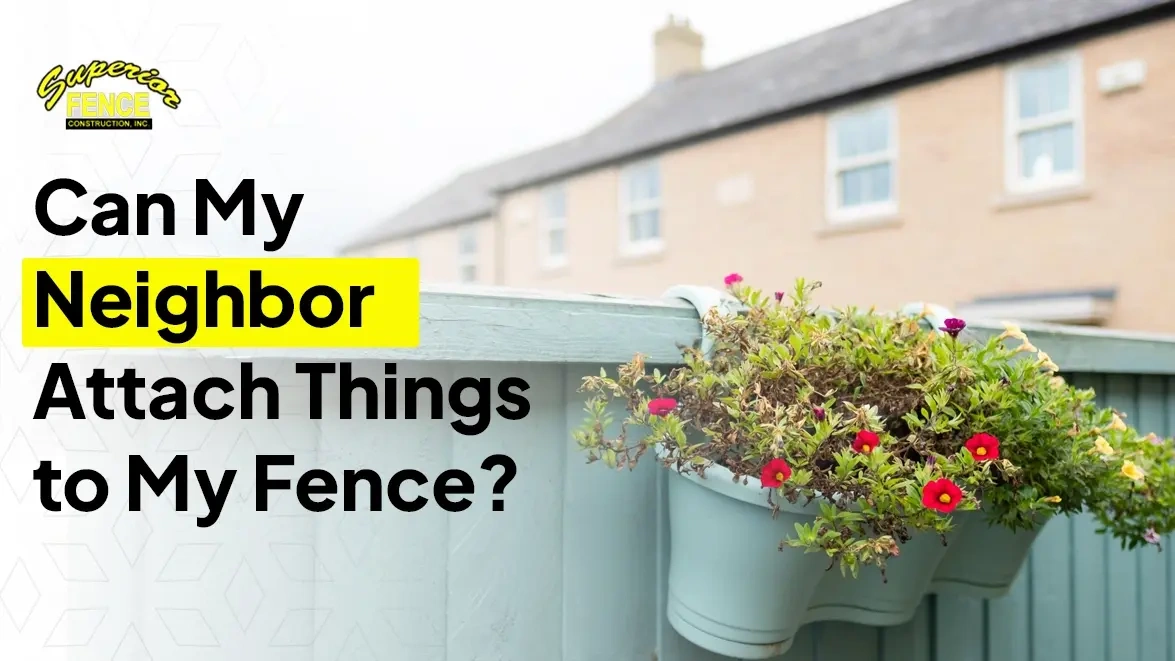
The answer depends on the circumstances. Fence ownership, local property rules, agreements between neighbors, and the type of attachment can all matter. A small decoration does not raise the same concerns as a heavy planter. A permanent fixture also creates different issues from a removable hook. The way the item is attached matters too.
If you own the fence, your neighbor should ask before making changes to it. If the fence is shared, check the rules that apply in your area. Do not remove an item immediately when ownership or legal rights remain uncertain.
What Can a Neighbor Attach to a Fence?
People often use fences for outdoor decorations and small household items. Someone might hang a light, plant, sign, hook, or decoration from the fence. The weight of the item matters. So does the method used to secure it. A lightweight decoration may cause little physical stress. A large planter becomes much heavier after the soil absorbs water.
Permanent fixtures deserve more attention. They may require several screws and could leave visible damage after removal. If you agree to an attachment, discuss where it should go and how it should be secured.
Can Attaching Things Damage Your Fence?
The risk depends on the fence material and the attachment itself. Wood, vinyl, and metal do not respond to drilling or added weight in exactly the same way.
Added Weight and Structural Stress
A heavy object can pull on the section where it is mounted. Fence posts may also take additional pressure when the attachment moves in the wind. Planters deserve particular attention because their weight changes after watering. An older fence may already have weakened boards or posts. Adding more weight can make those existing problems worse.
Holes, Screws, and Fasteners
Drilling into a fence leaves an opening in the material. Wood may split around a screw when the fastener is installed too close to an edge. Vinyl panels can crack if they are drilled without the right support. Metal fencing can also suffer damage when unsuitable hardware is used. Several holes in one section may leave the material weaker than before.
Moisture and Material Damage
An attached object can create places where water and leaves collect. Wood that stays damp may eventually deteriorate around damaged areas. Metal can develop rust where its protective coating has been damaged. The problem may not appear immediately. Check the area from time to time if an attachment remains on the fence.
What Should You Do If Your Neighbor Attaches Something Without Permission?
Try to establish the facts before deciding what to do. Find out who owns the fence and look at the condition around the attachment.
Talk to Your Neighbor
A simple conversation is often the best starting point. Your neighbor may not know that the fence belongs to you. They may also have assumed that a small attachment would not cause a problem.
Explain what concerns you and point out any damage. Ask them to remove the item if you do not want it there. Keeping the conversation calm gives both sides a chance to resolve the issue without unnecessary conflict.
Check Property Records and Local Rules
Property records can help establish where the boundary sits. They may also provide information about the fence’s placement. Local rules can matter as well. Some areas have specific requirements involving property boundaries and shared fences. Check the rules that apply to your location rather than relying on what another neighbor has done.
Document Any Damage
Take photographs before anything is removed. Capture the attachment and any nearby cracks, holes, broken boards, or other damage. Keep copies of messages you exchange with your neighbor. Save repair estimates too if the fence needs professional work. Good records become useful if the disagreement continues.
What Are the Rules for a Shared Fence?
A shared fence can require more cooperation between neighboring homeowners. Both sides may have responsibilities depending on local rules and existing agreements. That does not automatically give either person complete freedom to modify the fence. A large attachment can affect the structure or change its appearance from the other side.
Talk before making a permanent change to a shared fence. A written agreement can be useful when the proposed work involves drilling, added weight, or other substantial modifications.
How Can You Resolve a Disagreement Over Fence Attachments?
Start by discussing the actual problem with your neighbor. Explain why you object to the attachment and what outcome you want. If the conversation goes nowhere, look at your property records and local requirements. Keep your photographs and messages together. Having clear information can make the next discussion easier.
Mediation may be an option when both homeowners want to settle the disagreement. It can provide a neutral setting without immediately turning the matter into a formal legal dispute. Legal advice may be appropriate when the disagreement involves ownership, substantial damage, or a property boundary. Avoid destroying or removing permanent fixtures when you are unsure about your rights.
Conclusion
Fence attachment disputes often come down to ownership, permission, and the damage involved. Find out where the fence sits before taking action. A fence on the property line may need a different approach from one built entirely on your property.
Speak with your neighbor first when possible. Keep photographs and written records if the attachment has caused damage. Check local requirements when ownership or shared responsibilities are unclear. If you are dealing with a neighbor attaching items to a fence, confirm your property rights before removing anything or making repairs. For help with fence damage, repairs, or a new fence, contact fencing experts like Superior Fence Construction for professional guidance and reliable fencing services.
FAQs
Can my neighbor put screws or nails into my fence?
If you own the fence, your neighbor should ask before drilling or fastening items to it. Shared fences can involve different rules.
Can I remove something my neighbor attached to my fence?
Check ownership and local rules first. Speaking with your neighbor before removing it can help avoid a larger dispute.
Who is responsible for damage caused by something attached to a fence?
Responsibility depends on ownership, permission, the damage involved, and local law. Keep photographs and repair records when damage occurs.